
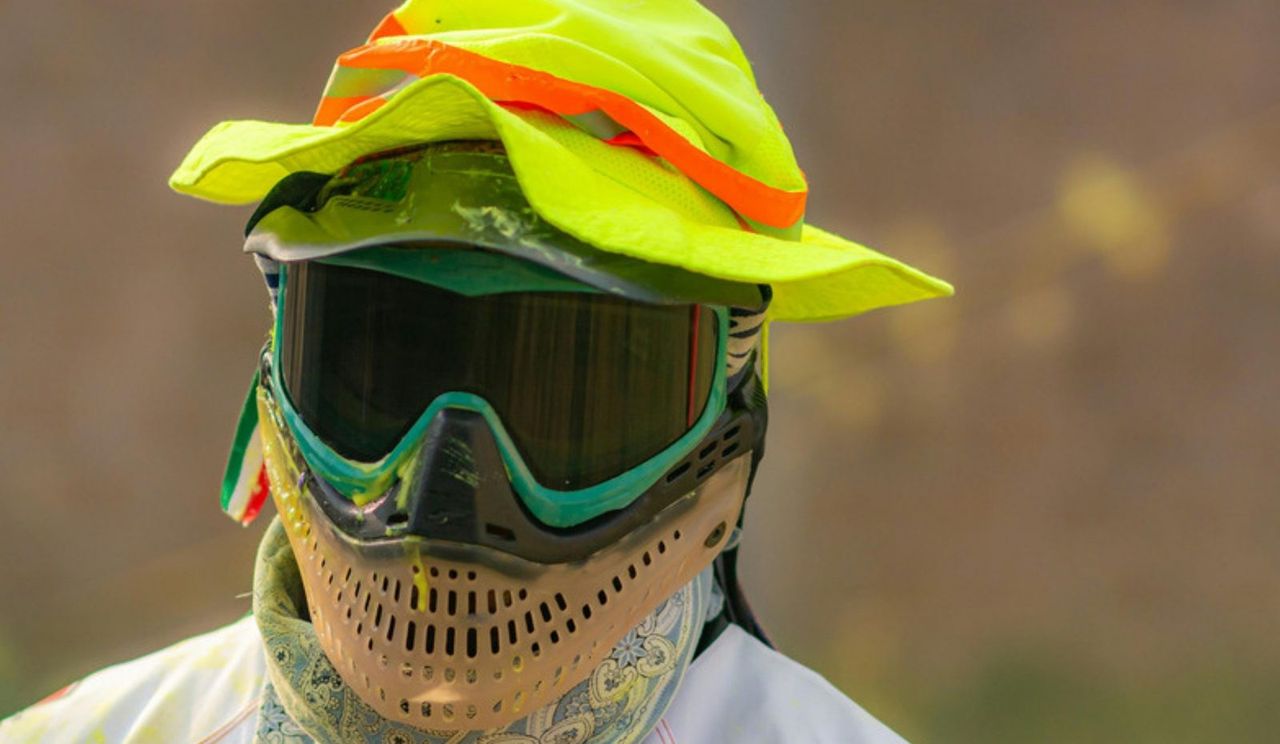
How we researched this: We read the scope sections that ASTM International publishes for ASTM F2879-19 (airsoft) and ASTM F1776-26 (paintball), the publicly posted text of ANSI/ISEA Z87.1-2020, and ISEA's page on the current Z87.1-2025 edition. We checked them on October 25 and 26, 2026. We don't test eyewear. A standard printed on a package is the manufacturer's own claim.
The short version
- For airsoft games (skirmishes and any other play where players aim BBs at each other), the eye protection standard written for the sport is ASTM F2879, "Eye Protective Devices for Airsoft Sports."
- For target practice only, with a paper or gel target and a backstop that stops ricochets, F2879 itself says shooting glasses that meet ANSI Z87.1 may be worn.
- ANSI Z87.1 is a workplace and school standard. Its own scope lists "sports and recreation" among the exposures it doesn't cover, so Z87 glasses are not a substitute for game goggles.
- Paintball has its own standard, ASTM F1776, which can cover the face and head as well as the eyes. Some airsoft fields accept paintball masks; field rules vary.
- F2879 protects the eyes and the area around them, not the whole head. Face and teeth protection is a separate choice.
What ASTM F2879 covers
ASTM F2879 is a specification from ASTM's sports equipment committee (F08). The current edition listed by ASTM is F2879-19. Its scope says four things a player should know:
- It's for airsoft with 6 mm projectiles. The eye protective devices it covers are designed to "minimize or significantly reduce injury to the eye and adnexa" (the eye and the tissue around it) from impact and penetration by airsoft BBs.
- Target practice is the exception. For airsoft target practice with a paper or gel target and a backstop that prevents ricochet, the standard says shooters may wear shooting glasses that meet ANSI Z87.1. Everything else in the specification is about eyewear for airsoft game play.
- Eyes only. Eyewear meeting F2879 protects the eyes and adnexa "and not necessarily" any other part of the head.
- Glasses and contacts are allowed underneath, based on what the manufacturer says in its product information.
What the scope doesn't tell you is the test detail. Those sections are in the paid standard, so we don't summarize numbers here. What matters for a buyer is simpler: look for the standard number itself.
Where ANSI Z87.1 fits, and where it doesn't
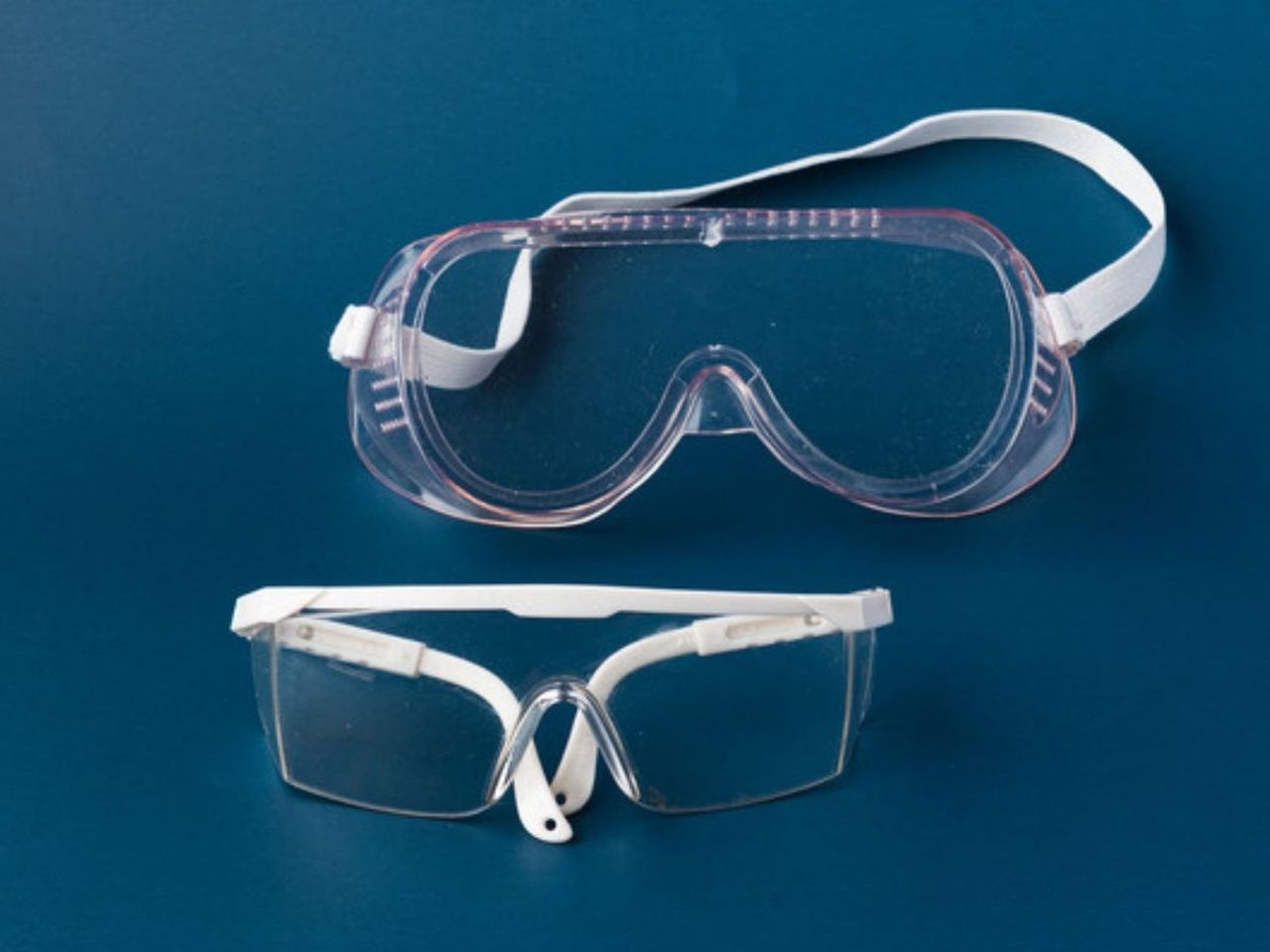
ANSI/ISEA Z87.1 is the US standard for eye and face protection at work and in schools. The publicly posted 2020 text describes its scope as protection from impact, non-ionizing radiation and liquid splash "in occupational and educational environments," and it lists "sports and recreation" among the hazards it doesn't cover. ISEA lists Z87.1-2025 as the current edition.
That's why the two standards point at each other the way they do:
- On a target lane, the risk is mostly your own BB bouncing back. F2879 accepts Z87.1 shooting glasses there, as long as the setup has a paper or gel target and a proper backstop.
- In a game, BBs come from other players, at short range and from any angle. That's the situation F2879 was written for, and Z87.1 wasn't.
If you're new to reading Z87 markings, our guide to Z87, Z87+ and Z87-2 markings explains what each one means. For live-fire shooting ranges, see our separate guide to shooting range glasses.
Paintball masks and ASTM F1776
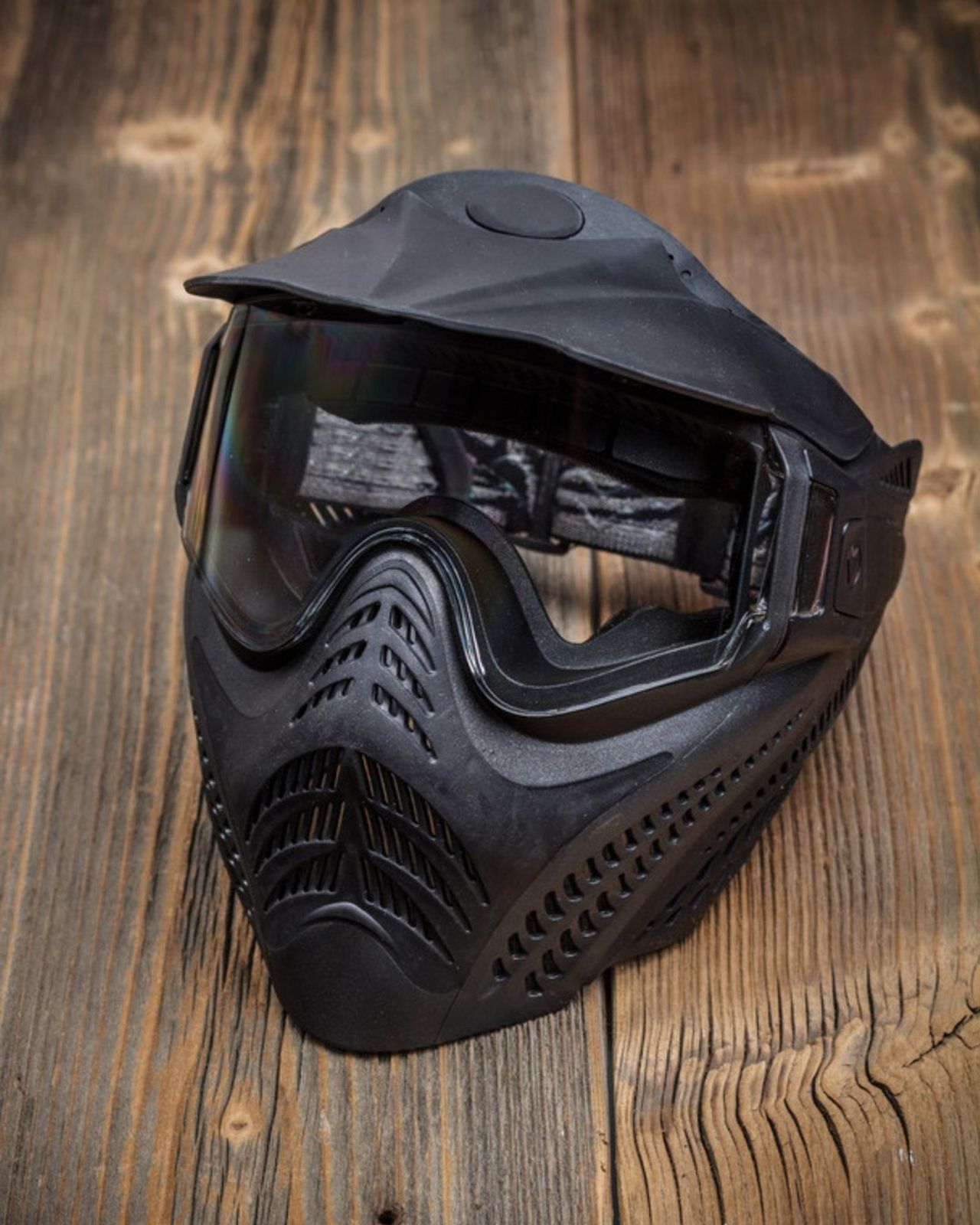
Paintball has its own ASTM standard, F1776, "Eye, Face, and Head Protective Devices for Paintball Sports." ASTM lists the current edition as F1776-26. Its scope differs from F2879 in one useful way: it describes three coverage types, from eyes only, to eyes plus face and ears, to added head coverage.
Some airsoft fields let players use paintball masks, and some don't. Some require full-face protection for younger players. Those are field rules, not standards, so check the rules of the field you're visiting before you go. If the field names a standard, that's the one to look for on your gear.
Wearing prescription glasses with airsoft goggles
F2879 doesn't stop you wearing glasses or contact lenses with your goggles. It leaves the details to the manufacturer's product information. In practice that means:
- Check that the goggle is described as fitting over glasses (often called "OTG," over-the-glasses) if you plan to wear your everyday pair under it.
- Your everyday glasses are not the protection. The goggle is.
- If you'd rather not double up, some goggles take a prescription insert. Ask the seller which standard the goggle meets with the insert fitted.
Our prescription safety glasses guide covers how Rx lenses are marked under Z87.1, which is useful background for the target-lane case.
How to read the label
A standards claim is only as good as what's printed on the product and its paperwork. Before you buy:
- Look for the standard number itself, such as "ASTM F2879" for airsoft or "ASTM F1776" for paintball. Words like "impact resistant," "ballistic" or "tactical" aren't standards.
- Check the edition year if it's shown. A newer edition isn't automatically better for you, but a missing number is a reason to ask.
- Ask the seller if the listing and the packaging disagree. The manufacturer is the one making the claim.
- Treat other ratings as different tests. Some products cite specifications written for other hazards. Those aren't the airsoft standard. Our eye protection standards comparison explains how the main standards differ.
A quick check before every game
None of this replaces your field's safety briefing, but it takes a minute:
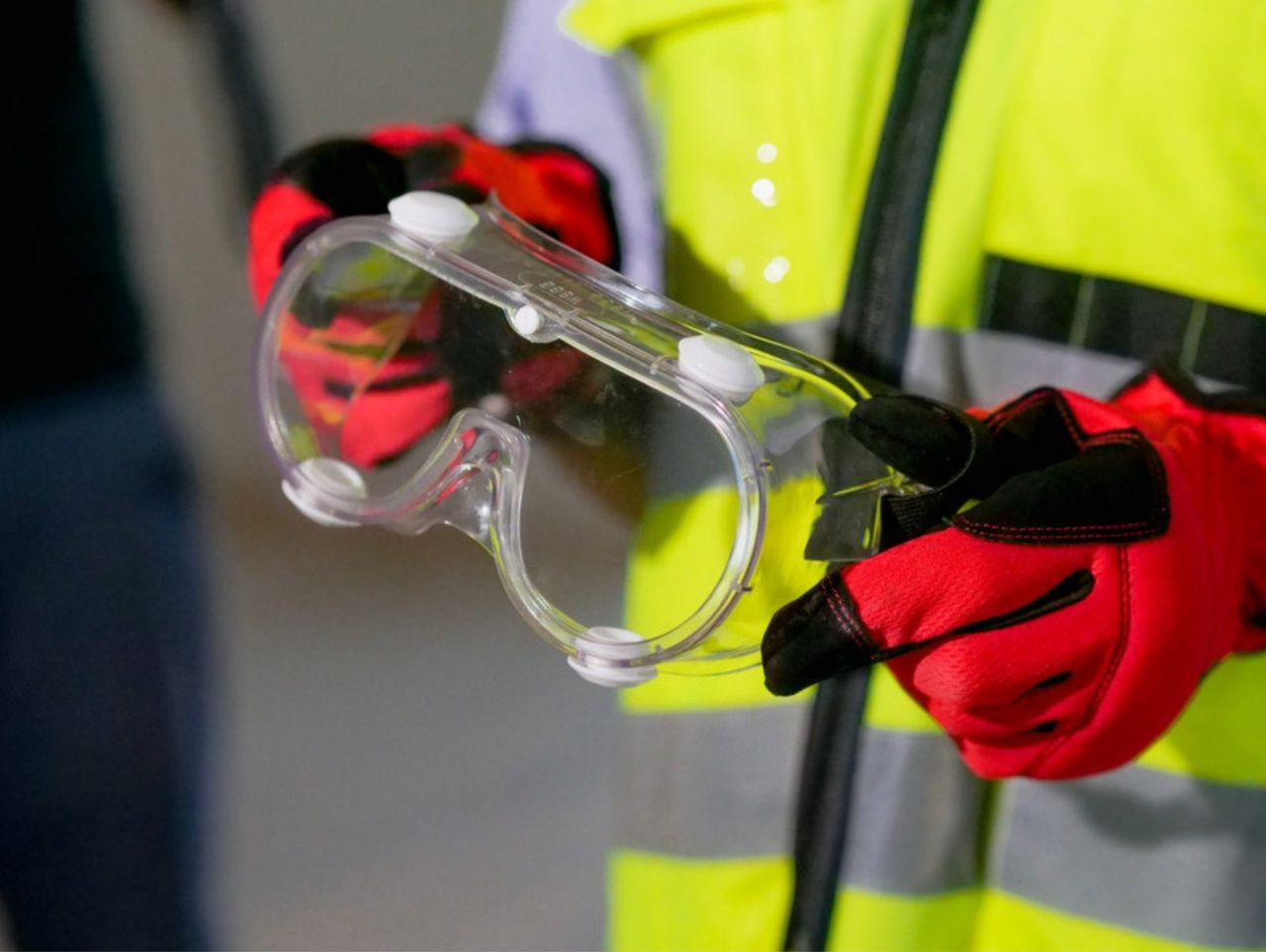
- Fit: the goggle sits flush with no gaps at the sides, top or bottom, and stays put when you shake your head.
- Lens: no cracks, deep scratches or chips. Replace a lens that took a hard hit if the manufacturer says to.
- Strap and frame: elastic still holds; no cracked frame or loose vents.
- Fog: sort out anti-fog before the game, not on the field. Lifting goggles during play is how eye injuries happen.
- Keep them on in the play area until you're in a safe zone, even when the game has stopped.