

How we researched this: We read the Oakley Meta Vanguard safety and warranty guide linked from Meta's health and safety page, Oakley's Vanguard product page and FAQ, Meta's help page on prescription lenses, the EU declaration of conformity that EssilorLuxottica publishes for the Vanguard model number, OSHA's eye protection rule, the FDA lens rule, and ANSI's and ISEA's descriptions of the Z87.1 and Z80.3 standards. We checked all of them on November 19, 2026. We don't test eyewear, and we didn't handle a pair for this article. Everything below is what those documents say.
The short version
- No Z87 rating appears in Oakley's own documents. Vanguard's safety guide says the product "must not be used as safety or protection against mechanical impact."
- The standards it names are sunglass rules: EN ISO 12312-1:2022, ANSI Z80.3-2018 (R2023) and the FDA's impact-resistant lens rule. Z80.3 itself excludes products covered by Z87.1.
- "Full-wrap lens for maximum coverage and protection" is a product-page description of coverage and fit. It doesn't name an impact standard.
- If a seller lists Vanguard as Z87+, look for the Z87 mark on the frame and lenses you actually receive. We couldn't confirm any such mark.
What Vanguard's safety manual says, word for word
The document is Oakley's safety and warranty guide for its AI glasses. Meta's health and safety page links it as "Oakley Meta Vanguard (PDF)", and Oakley's FAQ links a Vanguard safety and warranty guide with the same file name. The English text calls the product "the Oakley Meta glasses." The Spanish section prints the model number OW8001, which matches the model code on Oakley's Vanguard product page.
Four passages matter if you're wondering whether Vanguard can double as safety eyewear:
- Limitations of Use: "This Product must not be used as safety or protection against mechanical impact."
- A second "Limitations of use" box, next to the lens category table: "This Product is not to be used as safety glasses or eye protection against mechanical impact hazards."
- Where to wear it: "Do not wear the Product in activities or environments where you wouldn't wear regular glasses or sunglasses."
- Attention: using voice commands or seeing the LED lights "may distract you or increase the time it takes to react to hazards." The guide says to turn off the electronic functions "if you are in a situation that requires your full attention."
There's no mention of ANSI Z87.1, the US standard for work and school eye protection, anywhere in the English section. The heading over the standards list reads "Conformity to international regulations for sunglasses."
The standards Vanguard does cite, and what each one covers
| Standard or rule | What its publisher says it covers | In Vanguard's documents? |
|---|---|---|
| EN ISO 12312-1:2022 | The sunglass standard in Oakley's EU declaration, which calls OW8001 "personal protective equipment of category I sunglasses" | Yes |
| EU Regulation 2016/425, category I | EU personal protective equipment law. Category I covers "minimal risks," including "damage to the eyes due to exposure to sunlight" | Yes |
| ANSI Z80.3-2018 (R2023) | "Nonprescription sunglasses and fashion eyewear" for "casual, dress, and recreational purposes." It "specifically excludes products covered by ANSI Z87.1" | Yes |
| FDA 21 CFR 801.410 | Eyeglasses and sunglasses sold in the US must have impact-resistant lenses that pass a drop-ball test | Yes |
| ANSI/ISEA Z87.1-2025 | Eye and face protection against "impact, non-ionizing radiation and liquid splash exposures in occupational and educational environments" | No |
Two notes on that table.
"PPE" in the EU declaration doesn't mean safety glasses. In EU law, sunglasses are personal protective equipment against sunlight. Category I is the lowest of the three risk categories, and the sunlight item is listed there next to "superficial mechanical injury" and "contact with hot surfaces not exceeding 50 °C."
The FDA rule is a floor for all everyday eyewear. Its test drops a 5/8-inch steel ball weighing about 0.56 ounce from 50 inches onto the lens. Every pair of eyeglasses and sunglasses sold in the US has to pass it. It doesn't make a pair safety eyewear, and it says nothing about the frame, hinges or electronics. Z87.1 is a separate standard with its own tests and markings.
ANSI's store now lists Z80.3-2018 (R2023) as historical, replaced by a 2025 edition. The guide we read cites the 2018 edition.
"Full-wrap lens for maximum coverage and protection": what that does and doesn't mean
Oakley's product page markets Vanguard as a sport frame. Under "Built for sport," it says the glasses "feature a rugged full-wrap lens for maximum coverage and protection," integrate "seamlessly with bike helmets," and use temple tips and nose pads that "stay secure through sweat, speed, and impact." It lists the usage as "High-intensity sport and training" and the rating as "IP67, sweat, dust and water resistant."
Read next to the manual, here's what those phrases can and can't tell you:
- "Coverage" describes the shape. A wrap lens blocks more wind, sun and grit from the side than a flat front. That's a fit claim, not a test result.
- "Protection" on a sunglass page usually means sun. Oakley says its sun lenses give "100% UV protection up to 400nm," and the manual says the lenses "guarantee 100% UV absorption." Neither statement is about impact.
- "Stay secure through ... impact" is about the glasses staying on your face when you hit a bump. The same company's manual says the product must not be used for protection against mechanical impact.
- IP67 is about dust and water, not impact. The manual adds limits: the glasses "aren't meant for deep or prolonged submersion," running water, or "high-pressure conditions like jet sprays or heavy splashing," and it names surfing, rafting and waterskiing as examples.
None of this makes Vanguard a bad sport sunglass. It means the marketing and the manual are answering different questions. The manual is the document that tells you what the product is not for.
One more detail for cyclists. The manual lists which Prizm lens colors are suitable for road use and driving. All other Prizm colors are "not suitable for road use and driving per EN ISO 12312-1:2022." The guide says the filter category is printed on the packaging, the barcode sticker or the temple. Check your lens before you ride in traffic.
Seen Vanguard listed as "Z87+"? How to check the mark
At least one US safety-eyewear retailer lists Vanguard as Z87+ (with a Z87-2+ claim in the description). The same listing says prescription isn't available, and the price matches Oakley's. We couldn't find a Z87 claim from Oakley or Meta, and we couldn't confirm what that seller ships. If a store fits its own safety lenses into a frame, any Z87 claim would be that lab's or seller's claim, not Oakley's. So check the product, not the listing.

Under Z87.1, compliant protectors are permanently marked. ANSI's summary of the 2025 edition says "protectors bearing the permanent marking Z87 meet all applicable requirements of this standard in its entirety." The marks you're most likely to see:
- Z87: the basic mark.
- Z87+ or +: the high-impact mark.
- Z87-2: prescription eyewear. Z87-2+ is prescription with the high-impact mark.
A quick routine before you trust any glasses as safety eyewear:
- Look on the frame. Check the front and the inside of each temple for "Z87," "Z87+" or "Z87-2+."
- Look at the lenses. Lens markings are small and often near the edge. Hold the glasses up to a light.
- Read the paperwork. If the safety leaflet says "not for protection against mechanical impact," that settles it for that product.
- Ask in writing which edition of Z87.1 the eyewear meets, who made the lenses, and whether the mark covers the whole frame with the lenses fitted.
Our guide to Z87, Z87+ and Z87-2 markings shows each mark in detail. For a wider look at camera glasses and the standard, see are smart glasses safety glasses?
What to wear instead
At work
OSHA's rule (29 CFR 1910.133) says employers must make sure workers use "appropriate eye or face protection" when exposed to hazards such as "flying particles." The protection has to meet one of the Z87.1 editions the rule lists, or the employer has to show it is "at least as effective." OSHA also says eye and face PPE "shall be distinctly marked to facilitate identification of the manufacturer."
Vanguard's guide rules itself out of that job, so on a site with eye hazards, wear eyewear marked Z87 or Z87+ and follow your employer's rules on camera devices. Our work safety eye protection guides cover the options.

Cycling and running
This is what Vanguard is designed for, and the manual allows it, with warnings. ANSI's summary says Z87.1 doesn't cover "sports and recreation," so a Z87 mark isn't the test for a bike ride anyway. What matters here is in Vanguard's own guide: pick a lens category suited to the light and to road use, and turn off the electronics when you need your full attention. The guide also says that if the glasses impair your peripheral vision, you shouldn't drive in them.
Racket sports and other ball sports
Fast balls are an impact hazard, and the guide says not to use Vanguard for impact protection. Racket sports have their own eye protection standards. Our eye protection standards comparison shows which standard goes with which sport, and our pickleball glasses guide covers one popular case.
Vanguard with a prescription
Meta's help page says Vanguard is available with prescription lenses at participating retailers, and that "Prescription lens ordering is not currently available for Vanguard through Meta.com." It gives no prescription range for Vanguard. Oakley's product page lists "Prescription: Not available." Our prescription smart glasses range chart compares the ranges Meta does publish for its other frames.
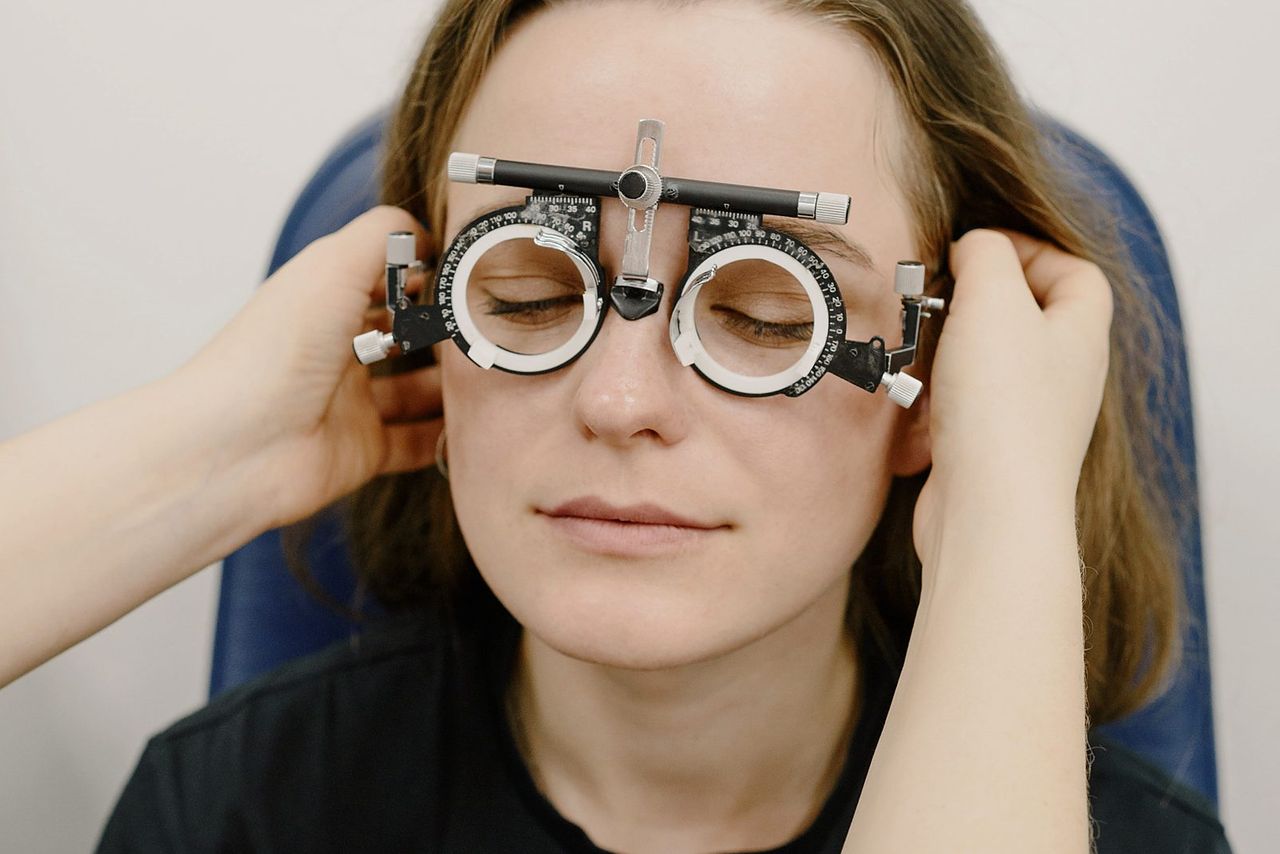
If you go to a store for prescription Vanguard lenses, ask:
- What range can you make, including cylinder, not just sphere?
- Who makes the lenses, and are they fitted to Oakley's spec? The manual notes that "to perform properly, the lenses must be fitted securely in the frame."
- Does the finished pair carry any Z87-2 mark? Unless the store says yes in writing and the mark is on the eyewear, treat it as prescription sunglasses.
If you need prescription eye protection for work, OSHA allows two routes: protection that "incorporates the prescription in its design," or protection worn over your glasses "without disturbing the proper position" of either lens. See prescription safety glasses and does OSHA require prescription safety glasses?
Bottom line
Vanguard is a sport sunglass with a camera, speakers and Meta AI, and its paperwork says so: sunglass standards, an EU category I sunglass declaration, and a plain warning against using it for impact protection. The wrap lens is about coverage and fit. If you see a Z87+ claim, look for the mark on the eyewear itself. For work, wear Z87-marked safety glasses, or Z87-2 if you need a prescription. We'll re-check the manual and listings by March 1, 2027.