
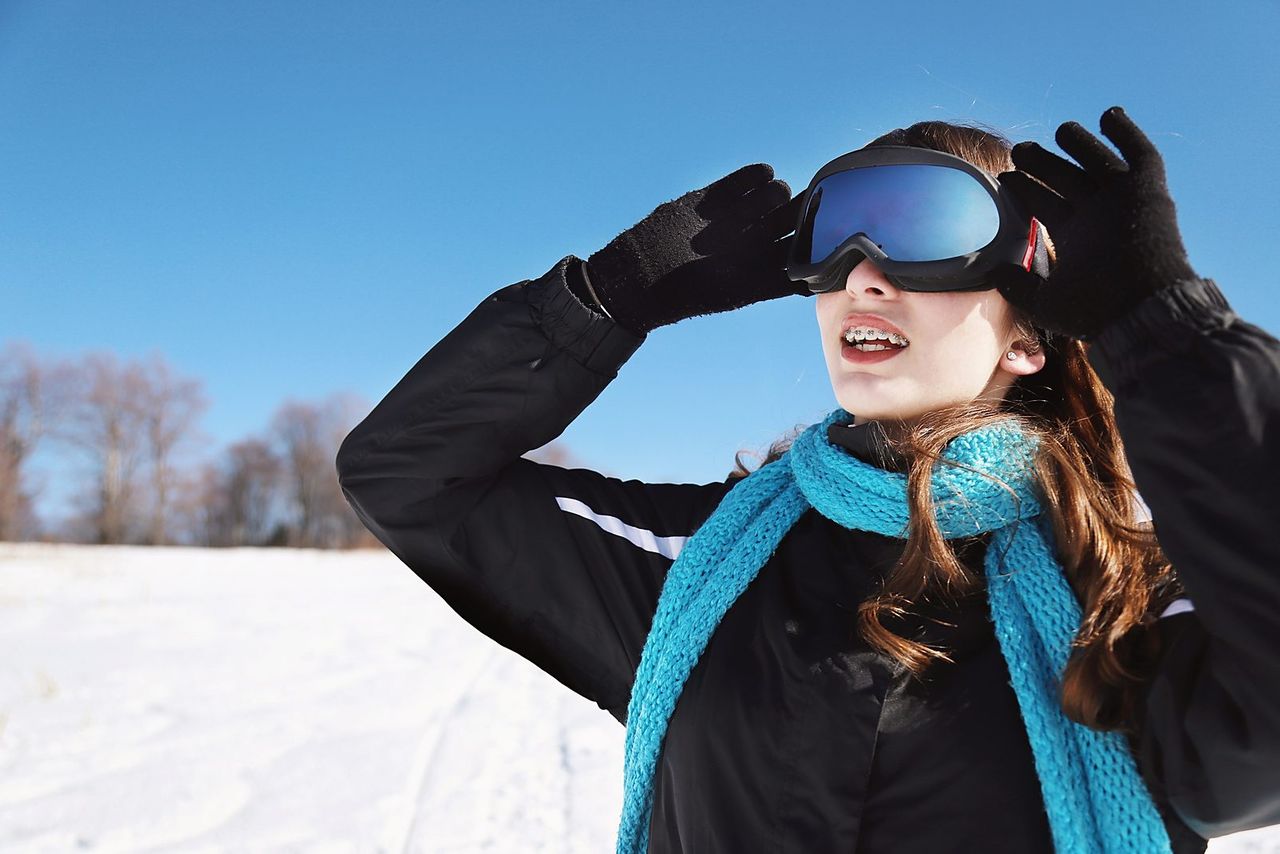
OTG is a fit feature, not a safety rating. "Over the glasses" means the maker left room for your frames and softer or cut-out foam for the arms. It does not name a standard. For what a ski goggle label does and doesn't cover, see our ski goggle safety standards guide.
If you wear glasses, the goggle has to make room for them. "OTG" is the maker's word for a goggle built to do that.
How we researched this: We read the official OTG pages of two goggle makers (Giro and Smith), ASTM International's page for the withdrawn ski goggle standard ASTM F659, ASTM's committee pages for sports eye protection, and ISO's catalogue page and public sample pages of ISO 18527-1:2021. We checked them on October 31, 2026, and re-checked the same pages on November 6, 2026. We don't test eyewear, and we don't rank goggles here.
The short version
- OTG means "over the glasses." It's a term makers and shops use for goggles with extra room inside and softer or cut-out foam for the arms of your glasses. It isn't a term defined by a safety standard.
- Not every pair of glasses fits. Giro says larger frames or glasses with thick arms "could have trouble fitting." Try your own glasses in the goggle before you buy.
- Your glasses shouldn't touch the goggle lens. Smith's fitting steps say to make sure your glasses "aren't touching the goggle lenses to prevent fogging."
- The old US standard warned about glasses underneath. ASTM F659 (now withdrawn) said spectacles worn under goggles should be impact-resistant glasses that meet ANSI Z87.1.
- Today's ski goggle standard covers prescription inserts, not glasses worn underneath. ISO 18527-1 includes goggles fitted with an insert that holds prescription lenses. Its public pages say nothing about glasses worn under the goggle.
What "OTG" means
OTG stands for "over the glasses." Giro describes OTG goggles as goggles that "are designed to accommodate prescription glasses." In practice that means two things:
- More room inside the frame, so your glasses can sit between your face and the goggle lens.
- Foam that lets the arms of your glasses through. Giro says the foam has "bigger openings or is more compressible" where your temples are.
Smith points out that "not all ski goggles are designed to be OTG." A regular goggle may press your glasses into your nose or push them against the lens. Smith also says OTG goggles can be worn without glasses, so the extra room doesn't stop them working as normal goggles.

Will my glasses fit?
No maker page we read gives a frame size that is sure to fit, so the only reliable test is your own glasses in the goggle. These steps follow Smith's OTG fitting FAQ on its Over the Glasses collection page, with Giro's notes added:
- Put your glasses on first, then bring the goggle up to your face.
- Line up the arms of your glasses with the cut-outs or soft spots in the foam at the sides.
- Adjust the strap so the goggle sits snug.
- Check for pressure. Smith says there should be "no excessive pressure on your face or glasses."
- Check the gap. Your glasses shouldn't touch the goggle lens.
- Check the seal around your nose and cheeks. Gaps let in cold air and snow.
- Then try it with your helmet (see below).
If your frames are large or have thick arms, expect a harder fit. Giro says such glasses "could have trouble fitting."
Fit tip — arms through the foam. Line the temples of your glasses up with the cut-outs or soft spots at the sides of the goggle foam. Then check that the frames don't press into your nose and that the lenses of your glasses don't touch the goggle lens.
Why glasses fog under goggles
Two lenses mean two surfaces that can fog. Giro lists fog as one of the drawbacks: "Glasses could also fog." Smith's advice is about fit: keep your glasses from touching the goggle lens.
What a standard says about fog is covered in our guide to ski goggle safety standards. In short, the fog test in ISO 18527-1 is optional, so a goggle can meet the standard without any fog claim. ASTM's committee for sports eye protection also has a proposed fog test method in progress (work item WK78886), but it's a general test method for protective eyewear, not a ski goggle standard, and it isn't finished.
What the label covers when glasses are underneath
This is where OTG gets confusing, because no standard we found defines it.
- ASTM F659 (withdrawn 2024). The old US ski and snowboard goggle standard left everyday prescription glasses, sunglasses and contact lenses out of its scope. It added a warning: "Impact resistant prescription spectacles that conform to the standard specifications of ANSI Z87.1 should be used if spectacles are to be worn under goggle-type eyewear." Z87.1 is the US safety-glasses standard; we explain its markings in Z87, Z87+ and Z87-2 explained. ASTM's committee page lists F659 as withdrawn and doesn't show a new ski goggle standard among its proposed work.
- ISO 18527-1:2021 (and EN ISO 18527-1 in Europe). Its scope says it applies to downhill skiing and snowboarding goggles, including goggles "fitted with an insert to carry prescription lenses." The public sample pages don't mention glasses worn under the goggle. So the standard covers the goggle, and the insert if there is one, but we found nothing saying it covers a goggle with your own glasses inside.
- "OTG" or "UV400" on a product page is a maker's description. It doesn't name a standard. If you want to know which standard a goggle meets, look for the standard's name on the label or the maker's official page, or ask the maker.
The practical point from F659's warning still makes sense: if you're going to wear glasses under a goggle, ordinary dress glasses weren't designed for impacts. Giro makes a similar point: glasses "are stiffer and/or have parts that could cause injuries in the event of a crash."
OTG goggles vs. a prescription insert vs. contacts
| Option | How it works | What a standard says |
|---|---|---|
| OTG goggle over your glasses | Your own glasses sit inside a roomier goggle | No standard defines OTG. Withdrawn F659 warned that glasses underneath should be Z87.1 impact-resistant |
| Goggle with a prescription insert | A small frame with your prescription clips inside the goggle | ISO 18527-1 includes goggles fitted with prescription inserts |
| Contact lenses with a regular goggle | No glasses inside the goggle | Withdrawn F659 left contact lenses out of its scope. Ask your eye doctor whether contacts suit you on the slopes |
Smith mentions the insert route as an alternative: a prescription adapter that fits inside the goggle. We'll cover inserts in a separate guide.
Fog tip — leave a gap. Two lenses mean two surfaces that can fog. Smith's fitting steps say to keep your glasses from touching the goggle lens. If they touch, warm air trapped between them has nowhere to go. A snug seal around the face still matters; the gap that helps is between your glasses and the goggle lens, not between the goggle and your cheeks.
OTG goggles with a helmet
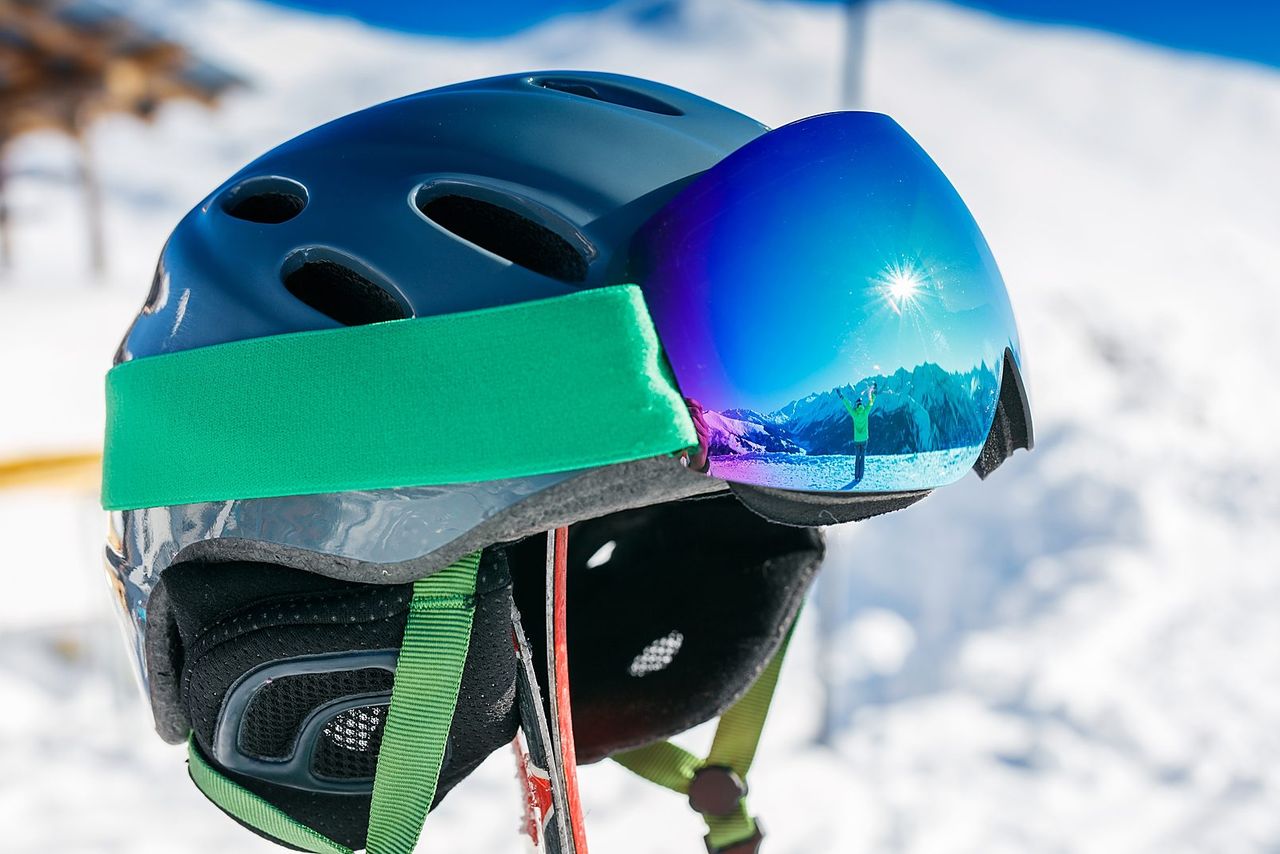
A goggle that fits over your glasses can still fit badly once a helmet is on. Before you buy:
- Wear the helmet you'll ski in when you try the goggle.
- Check the strap length so it reaches around the back of the helmet without straining.
- Look at the brow line. The top of the goggle should meet the helmet without a big gap, and the helmet shouldn't push the goggle down onto your glasses.
- Recheck pressure on your nose with everything on. A helmet can change how hard the goggle presses on your glasses.
Try the helmet you actually ski in. A goggle that fits over your glasses can still sit wrong once a helmet is on. Wear the helmet when you try the goggle, check the brow line for a big gap, and recheck pressure on your nose — the helmet can push the goggle down onto your glasses.
Two-minute shop check
- Does the maker call it OTG or say it fits over glasses?
- Do your own glasses fit, with no pressure and no contact with the goggle lens?
- Does it seal around your nose and cheeks?
- Does it fit with your helmet?
- Does the label or official page name a standard (for example, EN ISO 18527-1) and a lens category (S0 to S4)?
- Are your glasses impact-resistant? If not, think about an insert or ask your eye doctor about options.
Bottom line
OTG is a fit feature, not a safety rating. Check that your own glasses fit without pressure or touching the lens, try it with your helmet, and look for a named standard on the label. If you wear glasses under goggles often, impact-resistant glasses or a prescription insert are worth asking about.