
How we researched this: We read Rule 2.5 and the related penalty rules in USA Racquetball's Official Rules of Racquetball (as of September 1, 2026), Rule 2.5 of the International Racquetball Federation's 2026–2028 rulebook, US Squash's eyewear policy, ASTM International's own pages for F803-25 and F3164-24, and The Vision Council's December 6, 2024 announcement of F3164-24. We checked them on October 24 and 25, 2026. We don't test eyewear. A standard printed on a package is the manufacturer's own claim.
The rule, in plain English
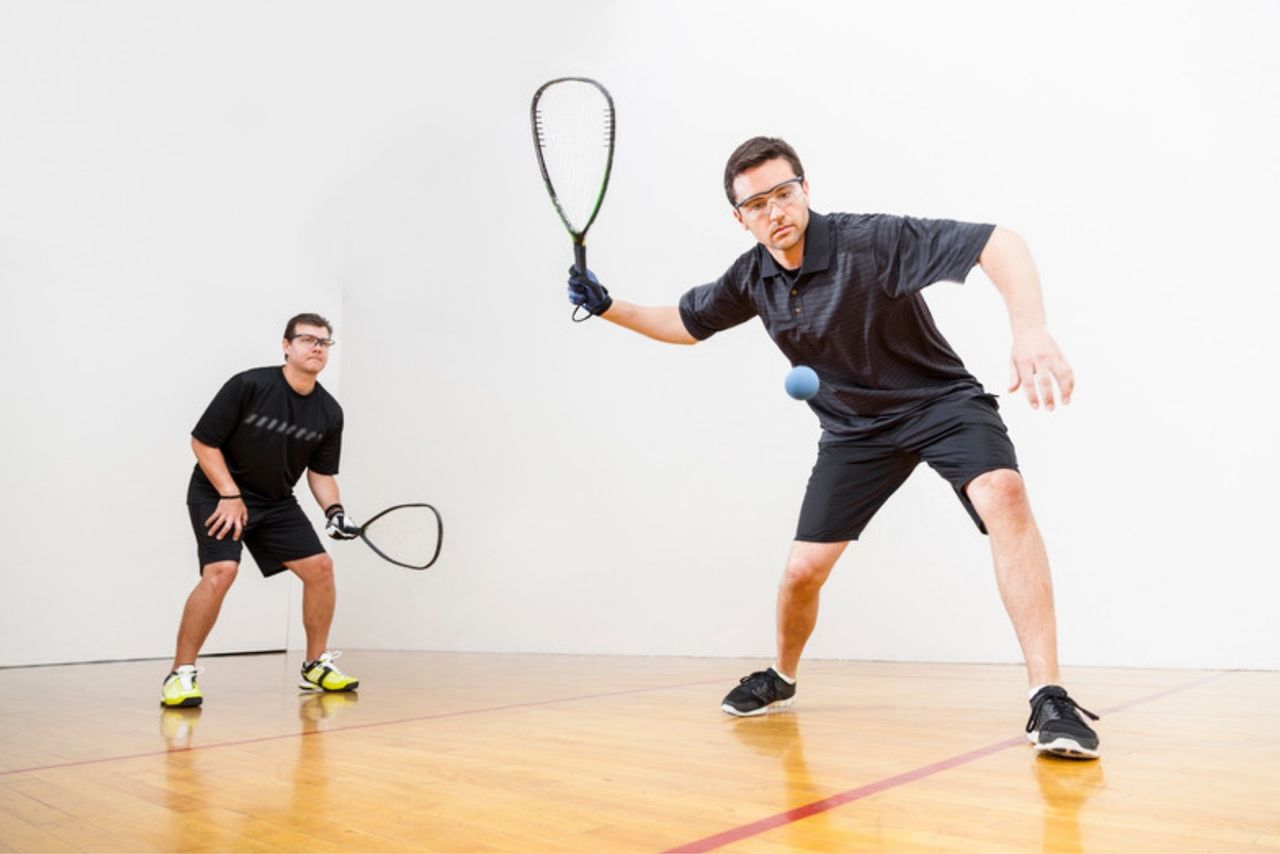
USA Racquetball's Rule 2.5(a) is short, but it packs in five separate requirements.
- Everyone wears it. "Every competitor, whether they require corrective lenses or not," must wear eyewear in any sanctioned event.
- It has to be lensed and made for racquet sports. The rule asks for "lensed eye wear as designed for racquet sports by the eye wear's manufacturer." It says street-wear spectacles and any un-lensed eyewear don't meet the protective standard.
- The maker has to stand behind it. The eyewear must be warranted by its manufacturer or distributor as (1) designed specifically for racquetball and (2) meeting or exceeding the ASTM F803 standard for racquetball eyewear that was current on the date it was made.
- Picking it is your job. The rule puts the choice of eyewear on the player. If the referee or tournament director asks, you must produce documentation showing it meets the ASTM standard. USA Racquetball says it doesn't test or evaluate eyewear itself.
- Wear it as designed. The eyewear must be unaltered and worn as designed whenever the ball is in play or about to be put into play.
Rule 2.5(d) extends this to warm-ups: proper eyewear has to be worn during any on-court warm-up period.
Penalties at a glance
| Situation | What the rulebook says | Rule |
|---|---|---|
| Playing a rally without proper eyewear | Technical foul (loss of a point) without warning, plus a timeout charged to you to get proper eyewear | 2.5(a), 3.17(a)9 |
| Second offense in the same match | Forfeit of the match | 2.5(a), 3.17(a)9 |
| No eyewear during on-court warm-up | Technical warning, then a technical foul if you keep warming up without it | 2.5(d) |
| Eyewear comes off during a rally | You lose the rally | 3.13(b) |
| Pro women's tour: eyewear comes off | Automatic avoidable hinder (loss of the rally) | 11.4 (LPRT) |
| Pro men's tour: warm-up | Eyewear not required during warm-up, required once play begins | 10.9(d) (IRT) |
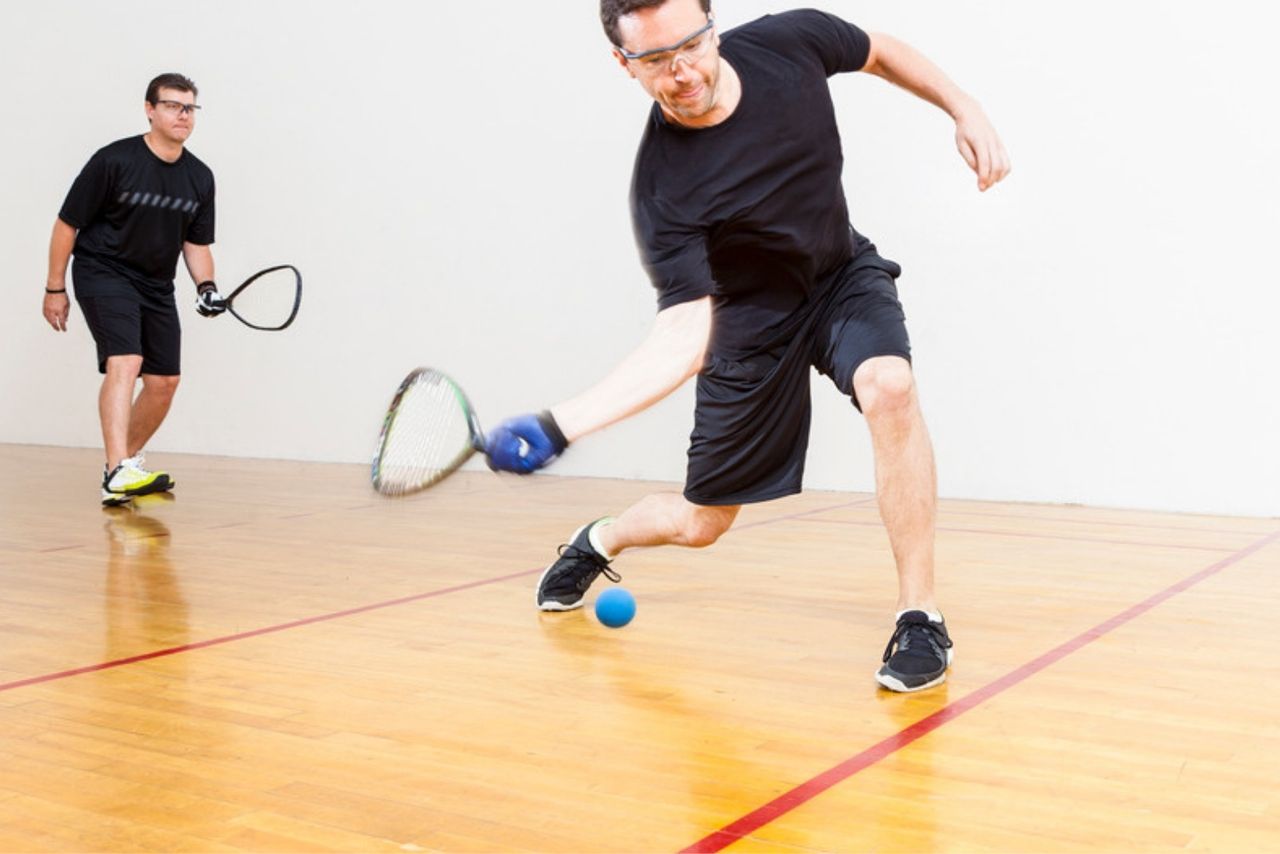
Two points are easy to miss. First, the penalty for the first offense comes without a warning: you lose a point straight away. Second, a dislodged pair counts against you even if it was an accident, because Rule 3.13(b) treats "losing one's eye protection during a rally" as a loss of the rally.
Why the rulebook says F803 when ASTM moved on
For decades, ASTM F803 was the standard for eye protectors in many sports, including racquetball, squash and tennis. That changed in 2019, when ASTM published F3164, a standard just for racket sports.
The Vision Council, the optical industry group whose staff helps lead the ASTM subcommittee, put it plainly in its December 6, 2024 announcement: F3164-24 "supersedes 'F3164-19' which replaced the racket sports eyewear provisions previously addressed by ASTM F803." The 2024 edition added test methods for pickleball.
ASTM's own pages match that split:
- F3164-24 is titled "Standard Specification for Eye Protectors for Racket Sports (that is, Racquetball, Squash, Tennis, Pickleball)." Its scope covers eye protectors for players of those four sports.
- F803-25's scope section now lists basketball, baseball and soccer. Racquetball isn't in it.
The USA Racquetball rulebook, even in the version that took effect on September 1, 2026, still names F803 in Rule 2.5(a). It doesn't mention F3164 at all.
What that means for you
There's a gap between the rule and the standard it points to:
- Eyewear labeled F803 for racquetball (often older stock, or products labeled for several sports) matches the rulebook's wording directly. The rule asks for the F803 edition that was current when the eyewear was made, so an older pair can still fit the wording.
- Eyewear labeled only F3164 is made to the standard ASTM now uses for racquetball. But the rulebook doesn't say whether USA Racquetball accepts it in place of F803.
We couldn't find a published USA Racquetball statement that settles this. So treat it as an open question, not a yes or a no. If your eyewear's packaging or instructions mention F3164 but not F803, email or ask the tournament director before the event, and bring the documentation Rule 2.5(a) says you may be asked for.
Squash and other racket sports
US Squash has already updated its policy. It says eyewear "must meet or exceed the current American Society for Testing and Materials standard ASTM-F3164," and that "the legacy ASTM-F803 standard will also be accepted." It also asks that eyewear used in competition appear on its ASTM reference listing, and says players are responsible for choosing eyewear that meets the standard.
So the two US governing bodies point in opposite directions: US Squash names F3164 first and still allows F803, while USA Racquetball names only F803. If you play both sports, check each sport's rule separately rather than assuming one pair covers both.
International play
The International Racquetball Federation's 2026–2028 rulebook (Rule 2.5) requires players in IRF sanctioned events to wear lensed eyewear made for racquet sports. It makes one exception: prescription non-breakable protective lenses. Eyewear must be worn properly and not altered in any way.
The IRF rule doesn't name an ASTM standard. Instead, it says national federations "are empowered to apply and enforce their own published safety standards in the matter of eyewear for their athletes." In the IRF rules, eyewear is required during play and during warm-up after you're called to your court. A first offense is a referee technical, and a second means disqualification.
Glasses, prescriptions and safety glasses
Your everyday glasses don't count. Rule 2.5(a) says street-wear spectacles don't meet the protective standard. U.S. federal law already requires impact-resistant lenses in ordinary eyeglasses and sunglasses (FDA, 21 CFR 801.410), but that rule sets a basic drop-ball test for everyday wear. It isn't a racquetball standard.
Prescription options. Both ASTM standards apply to eye protectors for people who wear corrective lenses and for people who don't. The usual routes are protective eyewear with prescription lenses fitted into it, or a protector designed to fit over your glasses, as long as the maker says it's designed for racquetball. If you wear glasses under a protector, the F3164-24 scope says polycarbonate is the most impact-resistant spectacle lens material and should be used.
If you want sport-protective frames with prescription options, the retailer A Sight For Sport Eyes has a prescription racquetball glasses collection (paid link). Check each maker's packaging for the standard it names (F803, F3164 or both) before an event.
Work safety glasses are a different thing. A Z87+ mark means a pair meets the impact requirements of ANSI/ISEA Z87.1, the occupational standard. But Z87.1's own scope (Section 2.1) lists sports and recreation among the exposures it doesn't cover. A Z87+ pair isn't racquetball eyewear under Rule 2.5(a), because the rule asks for eyewear designed for racquetball and warranted to the ASTM standard. Our Z87 markings guide explains what those work marks mean.
How to check your eyewear before an event
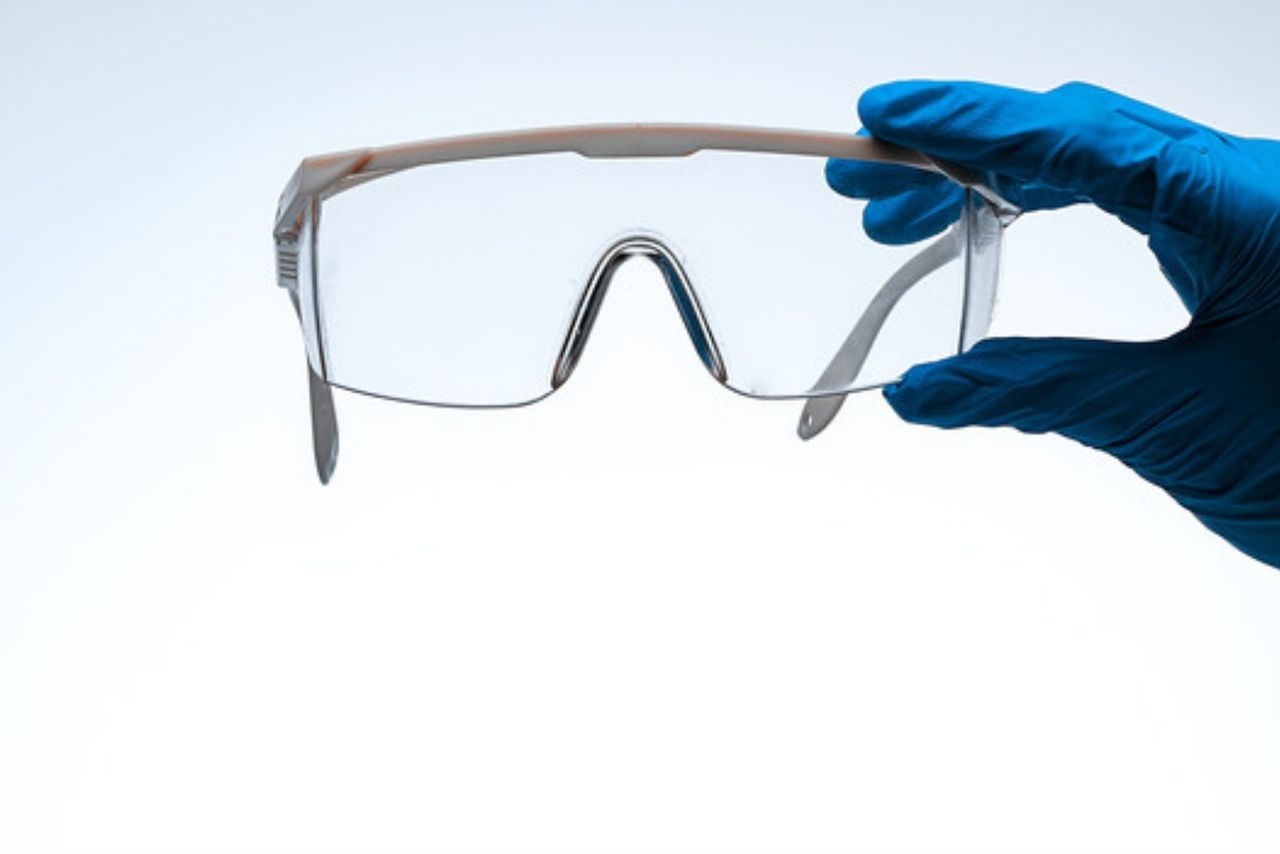
- Read the packaging and the instructions. Look for the sport (racquetball) and the standard the maker claims. Write down exactly what it says: F803, F3164, or both.
- Check the frame. Many makers mold markings onto the frame or temples. Markings vary, so the packaging and instructions are often the clearer record.
- Keep the paperwork. Rule 2.5(a) says you may be asked for documentation. A photo of the box or instruction sheet on your phone is easy to carry.
- If it only says F3164, ask first. Contact the tournament director before the event, not at the court door.
- Don't modify it. Removing lenses, cutting straps or otherwise altering the eyewear breaks the "unaltered" requirement.
- Make sure it stays on. Losing it mid-rally costs the rally under Rule 3.13(b), so fit matters as much as the label.
Common mistakes
- Assuming open eye guards are fine. The rule says un-lensed eyewear doesn't meet the standard.
- Wearing work safety glasses. Z87.1 excludes sports, and the rule asks for eyewear designed for racquetball.
- Skipping eyewear in warm-ups. Outside the pro men's tour modification, Rule 2.5(d) requires it during on-court warm-ups.
- Expecting a warning. The first offense during a rally is a technical foul straight away.
- Assuming F3164 settles it. It's the current ASTM standard for racquetball, but the USA Racquetball rulebook doesn't name it yet.
Bottom line
USA Racquetball requires lensed, racquetball-specific eyewear for every player in sanctioned events, and its rulebook still points to ASTM F803. ASTM itself now covers racquetball under F3164. If your eyewear names F803 for racquetball, it matches the rule's wording. If it names only F3164, the rulebook is silent, so ask the tournament director before you play. For choosing eyewear for other court sports, see our basketball goggles guide and pickleball glasses guide.
This page explains published rules and standards in plain English. Markings and standard claims are the manufacturer's; RatedEyewear doesn't test eyewear. Tournament directors and referees make the final call at their events.